
The ImaginePlus collection / 03 / For educators, faculty and subject matter experts
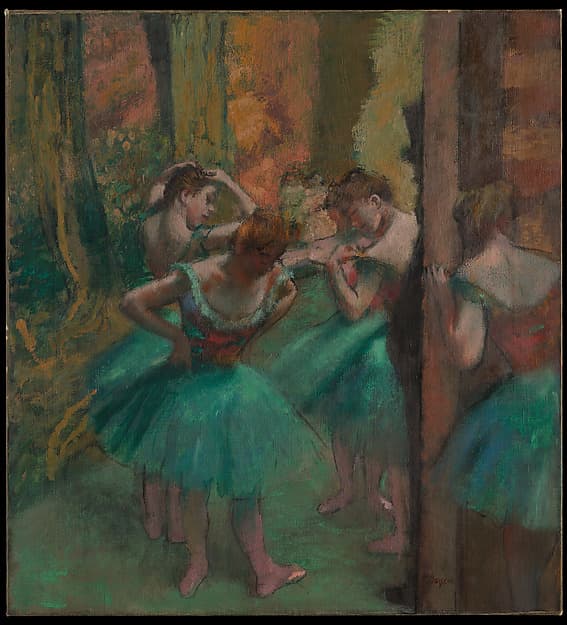
Dancers, Pink and Green
Edgar Degas
Art
Expression made shareable.
A painting, a poem, a dance, a theatrical world, or a passage of music gives another person something to encounter. Explore art across cultures and technologies, and consider why institutions have a lasting responsibility to make room for expression, interpretation, and the distinctive voices learners bring to their work.
01 / An educational perspective
The expressed result
Art gives expression a form that others can encounter: a painting, song, poem, dance, film, performance, digital work, or another made experience. Within our educational framework, it is the tangible or perceptible expression of a creative process. “Tangible” includes what can be heard, seen, performed, or experienced; it does not require a permanent physical object.
An artwork may share feeling, preserve memory, question a convention, invite attention, or make a possibility present. Its significance need not be reducible to practical utility. For institutions, retaining art means protecting opportunities to make, interpret, encounter, and discuss expression with the sustained attention it deserves. It means giving a rehearsal, a drawing, a script, or a carefully composed sequence enough time to become an object of inquiry, and giving learners a serious audience for the choices they have made.
“The artist is the creator of beautiful things.”
02 / Histories in conversation
Different cultures have drawn the boundaries differently
Boundaries and forms
Text becomes expression
The modern European grouping of the fine arts took shape relatively recently, with influential historical accounts locating its consolidation in the eighteenth century. It should not be projected backward as the universal way every culture separated art from skill, ritual, knowledge, craft, or ordinary life. The definition of art remains debated. [H03]
Chinese calligraphy complicates a division between writing and visual art. The Met's account explains its high cultural standing and the expressive potential of trained brushwork. An institutional exhibit can use this example to ask which forms a curriculum places at its center and why. [H06]
Across Islamic artistic traditions, writing may be encountered in a manuscript or integrated into an object or building. A calligraphic form can communicate language and participate in an overall visual design. Understanding a specific work requires attention to its period, region, and use; a single image cannot represent an entire civilization. [H07]
Material life and performance
Art can exist in an event
The Maya vessel introduced on the Imagination page reminds us that narrative need not be a flat image framed on a wall. Its painted composition unfolds around a shaped object. Tongan ngatu similarly brings expressive surface into material and social life. These examples widen the educational question from “Is it a picture?” to “How is meaning carried, encountered, and shared?” [H10] [H14]
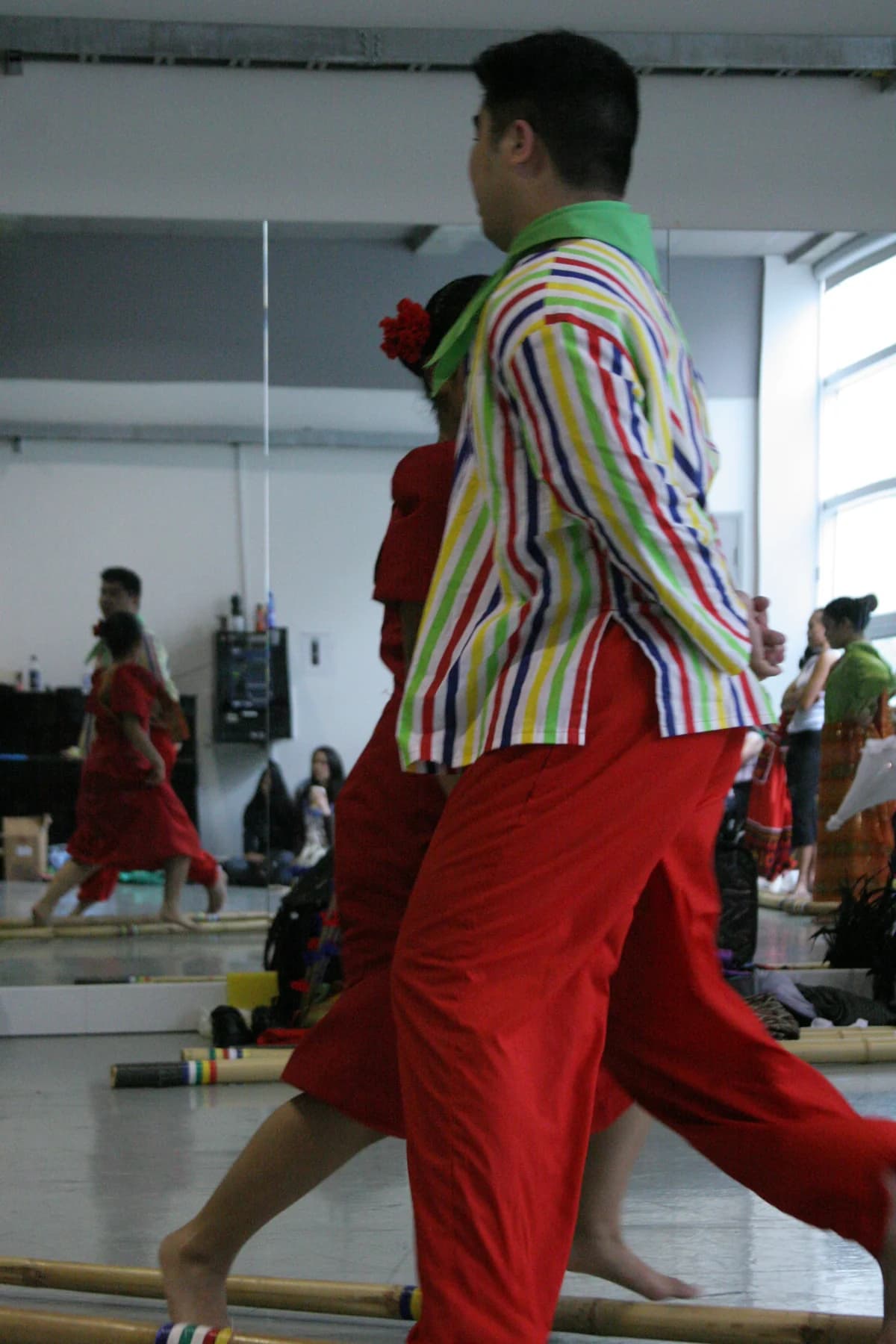
Art can also exist in an event. Wayang and Kutiyattam depend on performance, skilled practice, and the meeting of participants and audience. Their recognition as living heritage makes continuity and transmission part of the story. Photography or a clip may document a performance, but it is not a complete substitute for the practice itself. [H09] [H13]
The Seven Sisters exhibition demonstrates contemporary ways of presenting living cultural knowledge across painting, objects, and multimedia under particular custodial relationships. Afrofuturism connects artistic forms with Black histories and imagined futures. Neither belongs in a display of cultures frozen in the past; both make continuing expression central. [H11] [H12]
Recording and computational tools
Expression travels beyond a moment
Nineteenth-century photography, sound recording, and moving pictures changed the ways an expression could travel beyond its original moment. Talbot's photographic work, the development of cylinder recording, and the Lumière brothers' experiments belong to histories of multiple inventors and practitioners, rather than a single isolated invention story. Recording did not remove interpretation: framing, timing, staging, and the conditions of listening or viewing remained choices. [H16] [H17] [H18]
Computational work further expands what can be made and encountered. The V&A's history includes artists experimenting with machine-generated forms and digital processes decades before today's AI tools. Art's engagement with technology is ongoing. New tools invite new artistic decisions, while older media and practices retain their own value. [H15]
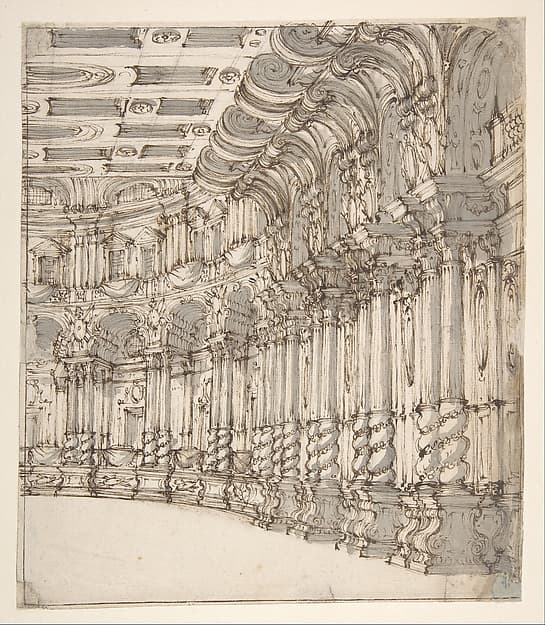
Design for a Stage Set: Interior of a Ballroom or Theater with Torqued Columns and Large Volutes Above
Francesco Galli Bibiena
03 / Evidence & interpretation
Why institutions should retain artistic practice
Art gives learners something to examine together. They can describe a choice, hear another interpretation, test a revision, and consider the relationship between intention and effect. It gives faculty an opportunity to assess both a work and the thinking made visible around it.
Research can support aspects of the educational argument without settling every question of artistic value. In Houston, a randomized arts-access initiative involving school pupils found benefits on selected outcomes, including writing and compassion, alongside reduced disciplinary infractions. The study concerns that intervention and population, not an established outcome of an adult ImaginePlus program. [R13]
Research on narrative and dramatic play supplies further developmental context. Some interventions found changes in specific emotional, narrative, or self-regulatory measures. These findings strengthen the case for studying how artistic activity functions in learning; they do not prove that every art activity produces every claimed benefit. [R10] [R11] [R12]
There is also a cultural argument that is not a laboratory claim. Societies choose which voices receive space, which histories are transmitted, and which forms are treated as worthy of sustained attention. The historical quotations on this page belong to that conversation. They are testimony and interpretation, distinct from empirical evidence.
04 / An educational perspective
A contemporary place for human expression
ImaginePlus's place in this history is as a current educational environment for developing and presenting audiovisual work with AI assistance. Its value to an institution should be demonstrated through the relationship among creative intention, responsible sources, production decisions, critique, and the final expression.
The aim is to retain and celebrate a range of imaginative starting points as production tools develop. A novice's first meaningful experiment, an experienced artist's deliberate transformation, and a work developed with differing permitted degrees of AI assistance can each deserve serious attention. Certificate attainment still depends on the published requirements for that program.
Art is not made more meaningful merely by adding a new tool. ImaginePlus earns its place when it helps educators make room for distinctive work, support development, and judge the learner's contribution fairly. Public examples require permission; publication is a separate, voluntary and authorized step.
Carry the inquiry into practice
Give distinctive expression a serious audience.
An institution makes a statement about what it values through the experiences it gives learners time to pursue. ImaginePlus offers two certificate programs that bring intention, production, explanation and faculty review into one educational pathway, with room for distinctive forms of expression.
Certificate / Level 1
Creator
A structured foundation for purposeful creative production
Prior exposure to sophomore-level concepts. Up to two minutes of audiovisual work with sound.
Explore Level 1 ↗Certificate / Level 2
Creative Producer
Sustained artistic direction, supported by evidence
Prior exposure to senior-level concepts. One 4:30–5:30 production with collaboration and integrated reflection.
Explore Level 2 ↗For educators, faculty and institutional teams
Explore how artistic production can serve your teaching purpose.
Explore the production workflow, discuss your learners' preparation, and review the evidence and responsibilities for an institution-supported cohort.
Schedule a Demo