
Creativity
Imagination put to work.
The ImaginePlus collection / 02 / For educators, faculty and subject matter experts
An idea asks something of the person who develops it: attention, curiosity, practice, judgment, and often the courage to begin again. Explore creativity as the active work of shaping possibility, with histories of tools, collaboration, and revision that help educators place contemporary production in a wider human story.
A teaching framework / a process open to return journeys
Possibility becomes a considered choice.
01
Select
What serves the intention, and why?
02
Test
What changes when we try an alternative?
03
Shape
How do the choices work together?
01 / An educational perspective
The bridge between thought and expression
Creativity is imagination put to work. It includes selecting, filtering, testing, arranging, and developing possibilities into a response to a problem or the plan for a project. A flood of ideas can begin the process; deciding what serves the work carries it forward.
This definition gives faculty something concrete to discuss. Why choose this image? What changes when a rhythm slows? Why keep one variation and reject another? A creative explanation can reveal learning that the final polish alone does not show. The process can also begin with hands-on making: a material, movement, mistake, or collaborator's suggestion may generate the next idea.
“Activity is the only road to knowledge.”
02 / Histories in conversation
From practiced traditions to a field of study
Brush, practice and expression
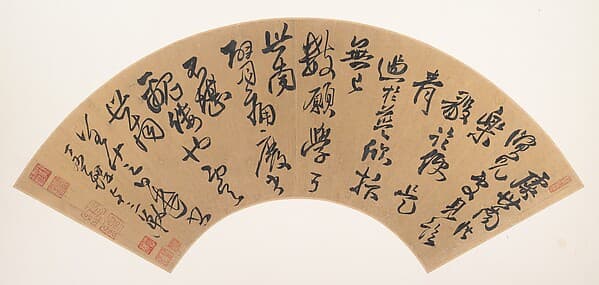
Creative activity predates the modern research term. In Chinese calligraphy, the relationship among learned forms, brush movement, ink, and personal expression developed over centuries. The flexible brush offered possibilities different from an incised mark, while practice and compositional discipline gave those possibilities shape. For educators, this is a useful example of invention working with knowledge and constraint. [H06]
Text, surface and invention
Islamic calligraphic traditions show another relationship among meaningful text, surface, and visual invention. The Met documents calligraphic design across manuscripts, ceramics, textiles, and architecture. The point is not that these different traditions share a single rule, but that tools, materials, and cultural purposes make particular kinds of creative choice possible. [H07]
Reproducible processes
Chinese engraved-block printing brings attention to a different tool relationship: a prepared image or text becomes a surface for producing impressions. This is a historical example of a reproducible process; the continuing craft deserves to be understood on its own terms rather than treated as an incomplete step toward today's software. [H08]
Theater as coordinated creative work
In Indonesian wayang, puppet-making, narration, performance, and music meet in a shared event. Kutiyattam in Kerala offers another living theatrical tradition, with a precisely developed language of facial expression, movement, and gesture. Both help an educator look beyond solitary inspiration to training, coordinated decisions, and an audience's understanding. [H09] [H13]
Collective material production
Tongan ngatu-making makes collective production visible in another medium. Te Papa describes women working together with barkcloth, pattern boards, printing, and painting. A finished cloth carries the effects of coordinated material work, not merely an isolated idea. [H14]
A modern field of study
The modern study of creativity gained momentum after J. P. Guilford's 1950 call for psychological research. Researchers subsequently examined individuals, thinking processes, motivation, and the environments that help or hinder creative activity. This change in academic attention was not the beginning of human creativity; it expanded ways of investigating it. [H02]
Artists negotiating computation
Computer art adds a further chapter. The V&A's collections document artists using computational systems from the 1960s onward. Code and generative procedures did not remove the need for artistic decisions; they changed the conditions under which those decisions could be made. Today's generative AI belongs to this broader history of artists negotiating tools. [H15]
03 / Evidence & interpretation
Exploration and judgment can work together
R04 / fMRI study
Cooperation between networks
An fMRI study of divergent thinking found cooperation between default and executive brain networks. It offers evidence against a simplistic opposition between spontaneous thought and directed attention. It does not establish a fixed brain recipe, a 50/50 balance, or a way to grade a student's creativity from activity logs. [R04]
The practical educational question is how to give room for exploration while helping learners develop judgment. A brief can invite alternatives; a comparison can expose a trade-off; critique can reveal an unintended effect; revision can show what the learner understood. These are ImaginePlus's teaching proposals, not experimental findings about the product.
Assessment should therefore distinguish the learner's intention, the choices made, the quality and coherence of the resulting work, and the explanation supported by evidence. The greatest number of prompts, clicks, or revisions is not automatically the strongest creative process. A short, purposeful change may matter more than a long record of activity.
04 / An educational perspective
Tools that make development discussable
ImaginePlus should help an institution connect source material, experiments, selected results, feedback, and revisions. A faculty member needs to see why an output was used, how it served an intention, and what changed after critique. An institutional demonstration distinguishes the available workflow from planned evidence and assessment tools.
This is why a production environment can matter educationally. It can create a shared place to examine choices across image, sound, story, and performance ideas. It can welcome beginners without treating expertise as irrelevant, and experienced practitioners without requiring every idea to begin in the same mode. Permitted AI assistance may vary by activity; the learner's accountable contribution remains a program question.
Carry the inquiry into practice
Give creative judgment a shared place to develop.
ImaginePlus brings intention, production, explanation and faculty review into an educational pathway. Explore how each level can make creative choices discussable while preserving different artistic interests, ways of working and permitted levels of assistance.
Certificate / Level 1
Creator
A structured foundation for purposeful creative production
Prior exposure to sophomore-level concepts. Up to two minutes of audiovisual work with sound.
Explore Level 1 ↗Certificate / Level 2
Creative Producer
Sustained artistic direction, supported by evidence
Prior exposure to senior-level concepts. One 4:30–5:30 production with collaboration and integrated reflection.
Explore Level 2 ↗For educators, faculty and institutional teams
Explore a creative production pathway for your institution.
Explore the production workflow, discuss your learners' preparation, and review the evidence and responsibilities for an institution-supported cohort.
Schedule a Demo